




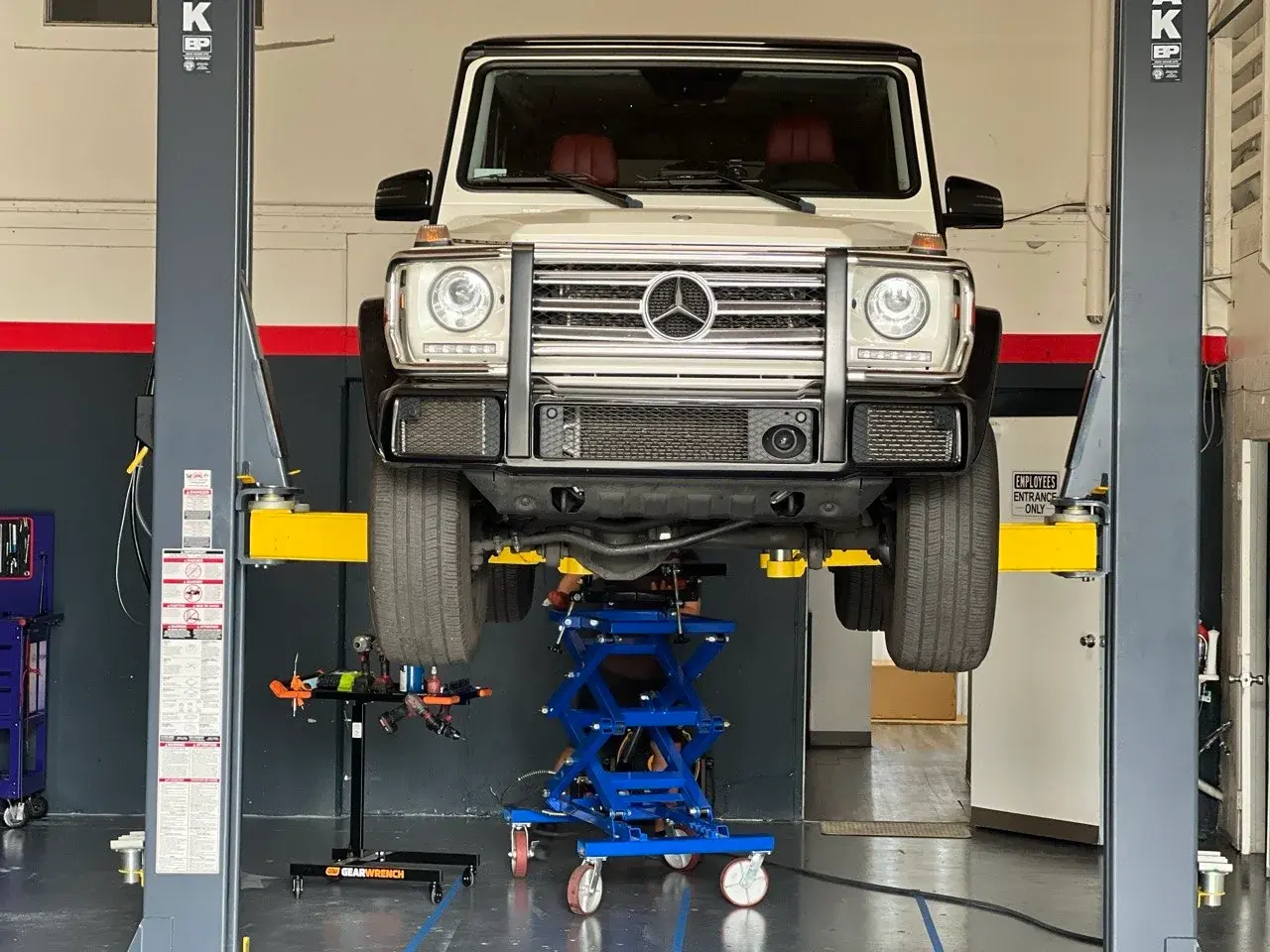
What is a small EVAP leak on a G-Class?
The evaporative emissions system (EVAP) captures gasoline vapors from the fuel tank in a charcoal canister. Under the right conditions, a purge valve meters those vapors into the engine. The vehicle also checks whether the system can hold the seal it expects. A tiny loss of seal can turn on the check engine light even if the G-Class feels normal on the road.
Start with what happened before the light came on. If it appeared after a fill-up, the fuel cap and its seal are worth checking first. Over time, the seal can dry out or crack. A loose connection, a small split in a vapor hose or a valve that lets air past when closed can cause a similar symptom.
This guide is for gasoline Mercedes-Benz G-Class models, including the W463 and later G-Class versions often called W463A. Across model years 2014–2027, the engine, EVAP equipment and diagnostic procedure can vary. We use the VIN and complete fault code to identify the setup on your G 550, AMG G 63 or other gasoline G-Class.
Mercedes EVAP codes P0456, P0442, P0457, P0455 and P0440
Generic scan tools show the base code. A Mercedes-capable scan may show extra characters, such as P045600 or P044200. Save the whole result, including any additional codes.
| Code | Meaning and next check |
|---|---|
P0456 | Very small EVAP leakA very small loss of seal was detected. A cap seal, valve, connection or vapor line can be involved. |
P0442 | Small EVAP leakThe monitor detected a small leak. The code gives a category and the source still needs to be located. |
P0457 | Fuel cap loose or offCheck whether the cap is fitted properly and look at the seal and filler neck. A recurring code calls for testing. |
P0455 | Large EVAP leakA missing or poorly seated cap, a disconnected hose or a larger opening can trigger this code. |
P0440 | General EVAP system faultA broader malfunction code. Other stored codes and test results help narrow the diagnosis. |
See the EPA reference for OBD evaporative emissions codes and an example of Mercedes-Benz service documentation.
How we track down a very small EVAP leak
- Read the full fault record. We look at which codes are current or stored, related faults and the conditions recorded when the code set, when available.
- Inspect and test the system. After checking the cap and filler neck, we review the vapor lines, connections and valve operation. Depending on the vehicle, a controlled EVAP smoke or leak test can help locate the opening or identify a section that fails to seal.
- Verify the repair. Once we identify the cause, we can recommend the repair and recheck the system. The onboard EVAP monitor may need the right operating conditions before it runs again.
If you see liquid fuel or smell strong, persistent gasoline fumes, stop safely, switch off the engine and arrange a tow. An active fuel leak needs prompt attention. Mercedes-Benz G-Class owner’s manual
Frequently asked questions
Does P0456 mean I need a new gas cap?
A loose cap or dried-out seal is one possible cause. If the cap seats correctly and the code returns, the shop can check the other parts of the EVAP system before replacing anything.
Why can the check engine light come and go?
The EVAP monitor runs only when the vehicle’s test conditions are met. That is why a code can return days after being cleared. Save the full scan report and note when the light reappears.
Can a small EVAP leak turn on the light even if the G-Class drives normally?
Yes. The EVAP monitor can detect a loss of seal before you notice any change in how the engine runs. Record the code and arrange a diagnostic visit if it returns or stays on.
What should I bring to an EVAP diagnostic appointment?
Bring your VIN or model year and engine, a photo of the full scan result, and any notes about refueling, fuel level or recent work around the fuel system.